
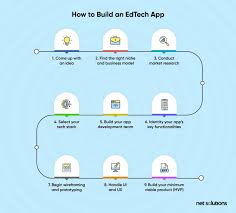
The EdTech landscape has transformed dramatically over the past decade. From basic online learning platforms to AI-driven, immersive educational experiences, technology is reshaping the way students, professionals, and lifelong learners engage with content. At the heart of this transformation are skilled education app developers and forward-thinking educational app developers who leverage cutting-edge technology and pedagogical insights to drive meaningful innovation.
As education continues to digitize, businesses, schools, and universities increasingly rely on specialized elearning mobile app development services to create solutions that are not only functional but also engaging, scalable, and future-ready. In this blog, we’ll explore how a professional education app development company contributes to innovation in EdTech, the strategies they employ, and the impact of their work on learners worldwide.
The Evolving Role of Education App Developers in EdTech
Traditionally, an app developer’s role was to write code, build user interfaces, and ensure the app functions smoothly. Today, education app developers operate at the intersection of technology, pedagogy, and user experience.
They are tasked with:
- Creating interactive and adaptive learning experiences
- Integrating AI and analytics to personalize learning
- Designing apps that work seamlessly across devices
- Ensuring scalability, security, and long-term maintainability
A skilled educational app developer doesn’t just follow trends—they anticipate learner needs and emerging technologies, ensuring that the apps they build set new standards for innovation in education.
Key Drivers of Innovation in EdTech
An education app development company contributes to EdTech innovation in multiple ways. Let’s explore the key drivers:
1. Leveraging Advanced Technologies
Technology is the engine of innovation. Leading elearning mobile app development services use tools such as:
- Artificial Intelligence (AI) for adaptive learning paths, intelligent tutoring, and predictive analytics
- Machine Learning (ML) to analyze student behavior and recommend personalized content
- Augmented Reality (AR) and Virtual Reality (VR) to create immersive, hands-on learning experiences
- Blockchain for secure credentialing and certificates
By harnessing these technologies, education app developers can transform traditional learning into engaging, interactive, and highly personalized experiences.
2. Emphasizing Personalized Learning
No two learners are the same. Modern EdTech solutions aim to deliver content tailored to individual needs, pace, and preferences.
An educational app developer can implement features such as:
- Adaptive quizzes and assessments
- AI-driven course recommendations
- Learning dashboards that highlight progress and areas for improvement
These personalized experiences improve engagement, knowledge retention, and outcomes, setting innovative EdTech apps apart from generic solutions.
3. Creating Engaging User Experiences
Learner engagement is at the core of effective digital education.
Top education app developers focus on:
- Intuitive and responsive user interfaces
- Gamified learning paths to motivate students
- Interactive multimedia content, including videos, quizzes, and simulations
Professional elearning mobile app development services ensure that these experiences are consistent across devices, making learning enjoyable and accessible anytime, anywhere.
4. Integrating Data Analytics
Data-driven decision-making is a hallmark of innovation. Education apps generate vast amounts of information about user behavior, learning patterns, and content effectiveness.
An expert educational app developer can leverage analytics to:
- Track learner progress and engagement metrics
- Identify knowledge gaps
- Provide insights for educators to optimize course design
These capabilities allow institutions and businesses to make informed decisions, continuously improving the learning experience.
5. Building Scalable and Flexible Platforms
Innovation is not just about features—it’s about sustainability. Scalable platforms allow EdTech companies to reach more users without compromising performance.
Education app developers employ strategies such as:
- Cloud-based architecture for flexible storage and processing
- Modular development for easier feature additions
- Microservices to ensure apps remain responsive under heavy load
By focusing on scalability, a educational app developer ensures that innovative solutions can grow with the user base and evolving market demands.
6. Enhancing Collaboration and Social Learning
Modern learning is collaborative. Education app development companies introduce features that enable social learning, peer-to-peer interaction, and teacher-student engagement:
- Discussion forums and chat systems
- Group projects and assignments
- Real-time collaboration tools
Professional elearning mobile app development services make it possible to integrate these features seamlessly, fostering community-driven learning.
7. Supporting Multiple Platforms and Accessibility
Accessibility and device compatibility are critical for reaching a wider audience. Top education app developers ensure that apps work across:
- Mobile devices (iOS and Android)
- Tablets
- Web browsers
They also prioritize accessibility for learners with disabilities, ensuring compliance with global standards. This inclusivity is a key aspect of innovative EdTech solutions.
8. Implementing Gamification Strategies
Gamification is a proven method for increasing learner engagement. Skilled educational app developers incorporate elements such as:
- Leaderboards and achievements
- Progress tracking and rewards
- Interactive challenges and quizzes
Elearning mobile app development services allow these gamification strategies to be integrated seamlessly, motivating learners to stay engaged and complete courses.
9. Maintaining Security and Compliance
Security is not an afterthought—it’s central to EdTech innovation. Education apps handle sensitive information, including student data, payment information, and learning records.
Top education app developers implement:
- Data encryption and secure authentication
- Compliance with GDPR, COPPA, and other regulations
- Secure cloud storage and backup strategies
By prioritizing security, development companies ensure trust and reliability, which are essential for scaling innovative solutions.
10. Continuous Post-Launch Support and Improvement
Innovation doesn’t stop at launch. The best elearning mobile app development services offer continuous support to:
- Address bugs and technical issues
- Roll out new features based on feedback
- Optimize performance as user bases grow
A committed educational app developer ensures that apps evolve alongside the changing needs of learners and institutions, keeping them ahead in the competitive EdTech landscape.
Case Studies: Innovation in Action
Consider some real-world examples where education app development companies have driven innovation:
- AI-Powered Tutoring Apps: Leveraging AI, these apps analyze student responses in real-time and adjust lessons accordingly. This adaptive learning approach significantly improves student outcomes.
- VR Science Labs: By integrating VR, learners can conduct virtual experiments safely, making STEM education immersive and engaging.
- Gamified Language Learning Apps: Leaderboards, achievements, and interactive challenges increase user motivation and retention, demonstrating the impact of gamification.
In each case, professional education app developers combined technical expertise with pedagogical insights to create solutions that set new industry standards.
Choosing the Right Education App Development Company
Innovation requires the right partner. When selecting a educational app developer, consider:
- Experience in EdTech: Look for a company with a strong portfolio of education-focused projects.
- Technical Expertise: Ensure they are proficient in AI, AR/VR, cloud solutions, and scalable architecture.
- Design and UX Skills: The company should prioritize learner engagement and intuitive interfaces.
- Post-Launch Support: Continuous improvement is essential for long-term success.
- Data Security: Confirm compliance with global data privacy regulations.
A trusted provider of elearning mobile app development services becomes a strategic partner, not just a technical contractor.
Future Trends in EdTech Innovation
Education app development companies are constantly exploring new frontiers. Emerging trends include:
- AI-driven hyper-personalization: Adapting content based on learner behavior in real-time
- Voice-assisted learning: Integrating voice commands for accessibility and engagement
- Blockchain credentialing: Secure, verifiable certificates for skills and courses
- Immersive experiences: AR and VR creating real-world learning simulations
- Microlearning platforms: Bite-sized lessons that fit into busy schedules
The companies that adopt these trends early and integrate them thoughtfully are the ones leading EdTech innovation.
The Impact of Innovation on Learning Outcomes
By partnering with skilled education app developers and leveraging comprehensive elearning mobile app development services, institutions and startups can achieve:
- Higher learner engagement
- Improved knowledge retention
- Broader accessibility for diverse audiences
- Efficient content delivery and management
- Scalable, sustainable growth
Innovative education apps not only provide better learning experiences but also deliver measurable outcomes for students and organizations.
Final Thoughts
In 2026, innovation in EdTech is driven by companies that understand the intersection of technology, pedagogy, and user experience. Professional education app developers and educational app developers are central to this evolution, using advanced tools, analytics, and design principles to create apps that engage, educate, and scale.
By leveraging expert elearning mobile app development services, organizations can turn traditional learning models into dynamic, personalized, and immersive experiences. Whether it’s AI-driven tutoring, gamified learning, or VR simulations, the right development partner transforms ideas into impactful educational solutions.

